
Back To The Future For The Unforgettable Form Of The Dirty Limerick
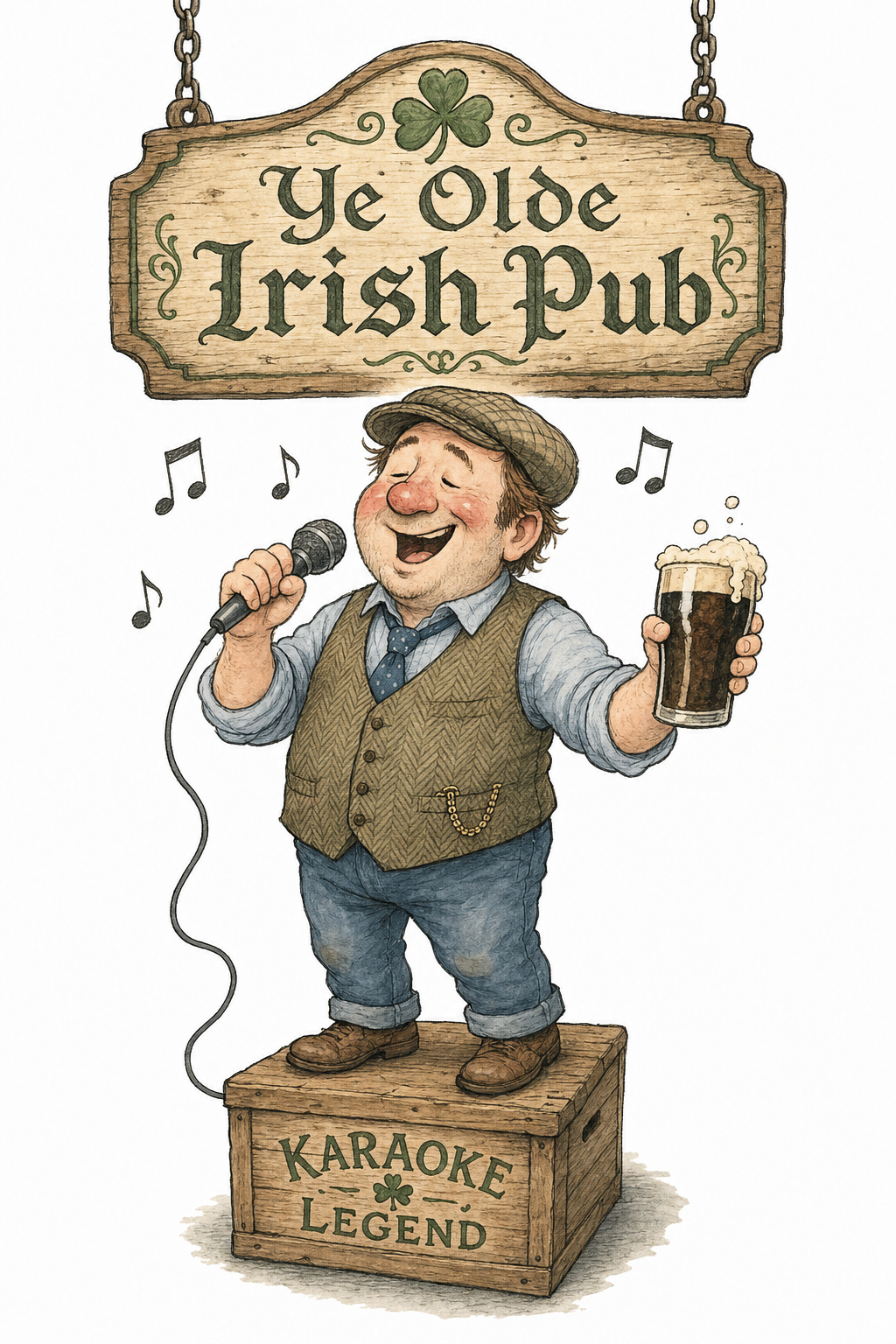
The fun little verses we now call limericks did indeed spring to life in the pubs of County Limerick in southwest Ireland back in the 1700s. Pub patrons took turns reciting their five lines of fun rhymes as spirited contests of well-lubricated wit and wile. It is the traditional verse’s predictably bouncy-rhyming that made them so sticky, fun to invent, and easy to remember and recite. They could be passed along and improved from one drinking spree to the next, where sometimes they were put to a tune, chanted, or just spat out like a modern rap. But no matter how the besotted star-of-the-moment chose to belt them out, they were bound to be rude, sexy, cynical, randomly insulting to someone or other, or all of the above. These bare-knuckle verses could be used by society’s lowest rung to poke fun at anyone from the barkeep, to an annoying neighbor, to the parish priest, and right up to the power elites who controlled their daily lives. That’s how the limerick form was born.
After about a century of delighting the unscrubbed pub patrons of Ireland, their sticky rhythm and rhyme got hijacked by the polite society of Victorian England, where it was put to use with an entirely new set of nonsensical nursery rhymes. It turned out the predictable musicality of the limerick had the same advantages for children as for drinking buddies. These ditties went mainstream and were published time and again in a series of books that became ubiquitous stalwarts in nurseries and libraries all around the English speaking world. The most famous of these was Edward Lear’s 1846 Book of Nonsense. One of its verses went like this:
There was an Old Man with a beard,Who said, “It is just as I feared! —Two Owls and a Hen,Four Larks and a Wren,Have all built their nests in my beard!”
But the cruder version of the limerick never completely died out. It just went underground during an epoch when propriety was the norm in public, and delightfully flouted in private. Soldiers scribbled them in their journals. Students at elite schools traded and recorded them. Even the English gentlemen who ruled the patriarchy quietly copied them from underground notebooks. Though the bowdlerized versions took hold in print, the original tradition survived in the shadows.
If you were to walk into a pub tomorrow and ask someone to bless you with their favorite limerick, you probably wouldn’t hear about an old man with a beard. More likely you’d hear the outrageous story of a man from Nantucket, or a young lady from Niger, or even a fellow from Brisbane whose troubles started with a goat. Children’s limericks are still around. But the form is most alive where it began — in a room full of friendly groans, guffaws, and inappropriate laughter, lubricated by camaraderie, and perhaps a bit o’ the drink.
Limerick Press is, in its small way, an attempt to give the original tradition its due. Of course, the pub regulars of eighteenth-century Ireland never imagined their quirky five-line attempts at edgy humor would end up on a website. But if they could see what we’re up to, we think they’d raise a glass.